
David M. Harris on Rules and Rejection Slips
The poet talks about The Art of Painting a Room and what a year at a literary agency taught him about sending work out.
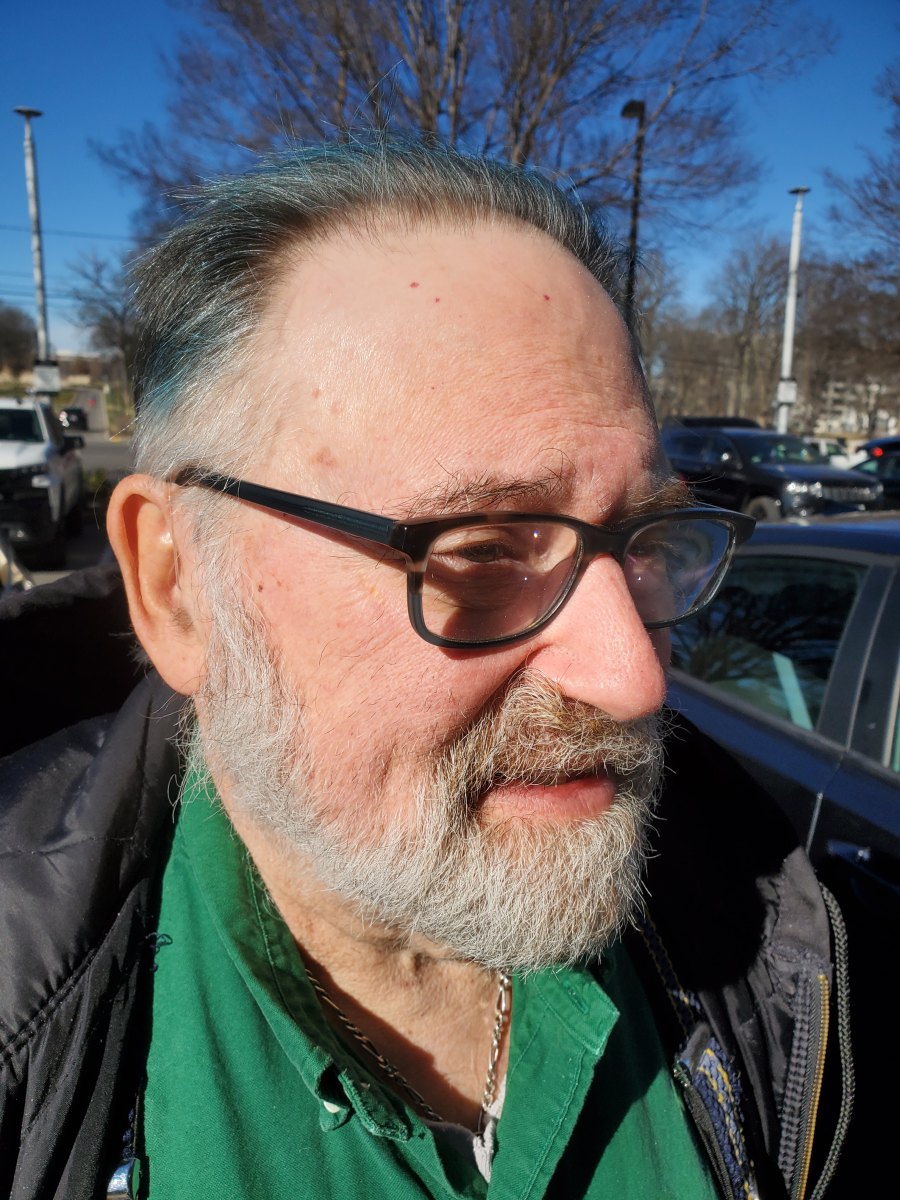
David M. Harris’s The Art of Painting a Room, part of the Prolific Press International Chapbook Series, is a book about rules: the infield fly rule, the bidding in bridge, the secret codes everyone else seems to know, and the unwritten terms that let a former war protester and a Vietnam veteran become friends over Scotch.
Harris spent his first career in book publishing as an editor, agent, and copyeditor, then worked in film production before earning his MFA and teaching college English. The poems move between sonnet, haiku, persona and free verse. In this conversation he talks about the Ogden Nash poem behind one of them and what a year at the Scott Meredith Literary Agency taught him about sending work out.
Prolific PressHow did The Art of Painting a Room begin: as a poem, a cluster of poems, or a problem you kept circling? And when did you start to recognize it as a chapbook? The book keeps returning to rules, memory, rooms, games, wars, trees, and the past “tapping on your shoulder.”
I’m not sure even now that the collection really is about anything other than my continuing search for ways of understanding the universe and my place in it. At one point in the last few years I came to believe that I am probably on the autism spectrum, at least a little bit, which may explain my continuing quest for some clear set of rules that will explain how to connect with the world and its people. That may not be obvious here, but it does underlie much of my work.
Prolific PressThe title poem treats painting a room as practical labor, revision, escape, and renewal, ending with the charge to “make it yours.” What made that poem the right doorway into the whole book?
When I was working on my MFA, I attended an academic conference and read my paper, “Some Questions About Fiction.” I was then asked about my theory of fiction, and I didn’t have a good answer for that. The title poem is my first conscious attempt to express a theory of art, particularly poetry (thus the allusion to Ezra Pound).
Prolific Press“At the Top of the Stairs” reads almost like an inventory of the pressures underneath the poems: fatherhood, husbandhood, manhood, fear, betrayal, and “secret codes.” How did that compressed list come to you, and what did it allow you to say that a more narrative poem might not have?
That one started with an Ogden Nash poem in which he discovers the word “velleity.” I knew I had to do something with that, so I put it on the page and waited for something to happen. The list was just what happened, and the final poem is very close to the first draft.
Prolific PressIn “If a Declared Infield Fly is Allowed to Fall,” baseball, card games, college politics, and childhood embarrassment all turn on the comfort and failure of rules. What drew you to games as a way to think about growing up and trying to understand the world?
A friend of mine was asked to edit an issue of Red Wolf Journal on the subject of “play,” and asked me for a contribution. The infield fly rule, reputed to be the least comprehensible rule in baseball, was an obvious choice. And once I was started on rules, the rest just fell into place (see my response to the first question).
Prolific Press“After Nam” places a former protester and a veteran in an office-party conversation, with Scotch, suits, and an “unresolved war” still between them. How did you find the tone for a poem that has to hold political anger, regret, and the desire to work together?
Many of my poems, including this one, are based on real experiences (although the veteran in this one was the husband of a co-worker). I was helped here by the time between the hottest anger on both sides and the meeting, which allowed the desire to be friends to be more important than the political differences from two decades earlier. And I knew from the beginning of the poem that it was going to end with the friendship. (I don’t always know where a poem is heading when I start it.)
Prolific PressSeveral poems borrow established containers or voices: haiku in “Some haiku,” the sonnet shape of “Suburban Epiphany,” persona in “Uriah” and “Déjeuner sur l’herbe — Manet,” and the mock meeting in “Poets Anonymous.” How do you decide whether a poem needs a form, a mask, or plain speech?
“Suburban Epiphany” came from a prompt by Bruce Smith in a workshop: start with a question and use a line from an existing poem. I had always wanted to use that line from Keats transplanted to Connecticut, so the sonnet was an obvious choice. “Déjeuner sur l’herbe” was a visual prompt from Sarah Schulman when I was working with her at Goddard on my MFA, and I couldn’t make it work in prose, so it was one of my first serious attempts at poetry. When I write haiku, I am usually setting out to do haiku (“Kaaterskill Clove” is an exception). But in most cases I just start writing the poem and then discover what shape it wants to be. As to plain speech, that’s the way I speak.
Prolific PressThe book ranges widely, from an olive tree in the Roman Forum and the Higgs boson to coyotes near Manhattan, Baptist ministers on a plane, and a woman playing the Appassionata at an estate sale. How did you order poems with such different materials so they would feel like one room rather than many separate rooms?
Sequencing is, for me, the hardest part of a project. In most cases I just write a bunch of poems and then later, if I’m lucky, see that they connect in some way. I don’t always recognize in what way that is, so organizing them meaningfully is not just difficult, it’s nearly impossible for me. In this case, I think I just got lucky.
Prolific PressYou describe yourself as a New Yorker in exile in Tennessee, and poems like “Meeting the Trees,” “Bible Belter,” and “Out of the Wild” seem alert to what changes when a landscape changes. How has living in Middle Tennessee altered what you notice, and what still pulls you back toward New York and New Jersey?
“Out of the Wild” is actually set in Garrison, NY, about thirty miles from Penn Station in Manhattan. That was where I was living before I moved to Middle Tennessee. (My current home is also pretty rural, about thirty miles from downtown Nashville.) The big change was moving from Manhattan (about 24 years) to the small-town and rural outer suburbs. But the cultural changes have been striking: there aren’t quite so many churches in New York, and they don’t have billboards along the highways. In New York I was much less likely to be the only Jew in the room. (Although there are advantages to a writer in being an outsider.) There was also much better Chinese food. Much of what I regret about leaving New York has to do with food. A very large, world-class city simply has more opportunities in that line than a medium-size Southern city.
Prolific PressBefore teaching college English, you worked as an editor, agent, copyeditor, and in film production, and “Playing God” knows the submission pile from the other side of the desk. How has that professional life shaped the way you revise, submit, and read your own poems?
Although I guided authors in their revisions as an editor, I never learned how to do it on my own work until I went to graduate school. It was a matter of achieving distance from the work, which was no problem if it was someone else’s text, but with my own I always remembered why I had made the creative choices in the first (and all too often final) drafts. What helped me more than anything else was having an informed and trustworthy eye applied to my writing, first my advisors at Goddard and later the members of various workshops and poetry groups. I can revise my drafts now, but don’t submit most of my work until it has been seen by someone else.
As to submission, my approach to that is largely shaped from the year I spent as an agent with Scott Meredith Literary Agency, at that time one of the largest agencies in New York. My experience there and as an editor taught me that there are two personae in the business of writing: one is the artist, creating the best possible work, and the other is the businessperson, trying to get that work the best possible exposure.
Prolific PressMany poems in this chapbook had strong lives in journals before they gathered here, while “Val’s Tits” appears here for the first time. What would you tell writers who are trying to decide when individual poems have become a manuscript?
I just recently learned a trick that is helping me: for each poem, I write a few words on an index card, each one naming a theme or subtheme for the poem. (It helps to wait at least a few months after writing the poem before you do this, so you can look at the work with somewhat fresh eyes.) Then you can start to see the patterns in your concerns and pull those poems together and see how they work together.
On the other hand, there were thirteen years between my first and second books, so you may not want to follow my advice too closely.
Prolific PressBecause “Playing God” so vividly imagines the editor sending out standard slips, notes of encouragement, and second looks, what encouragement would you give poets who are submitting work and living with rejection?
If I keep writing until I am 120, I may get as many rejections as I sent out as an editor and agent. If writers take rejections personally, they will either develop thick skins or curl up into a ball and stop writing, or stop trying to get published. One of my favorite rejection stories involves an editor who was a friend, who rejected a story of mine with a personal letter that started, “Dear Gerald.” He had sent me someone else’s rejection.
Publishing, even publishing poetry, is a business. When you submit to an editor you are not asking for a judgment on your personal merit; you are offering to do business. A rejection is a decision not to do business, and it is a business decision every bit as much as it is an aesthetic one. Yes, many rejections are because the editor simply does not think the work is good enough, but most editors are too polite to say that. And in any case you should always be working toward making your work better, no matter how good you think it is now. But I have had poems accepted after ten or more years of submissions, when I finally got them in front of the right editors at the right time.
In fact, one of my (too many) current writing projects is a non-fiction book about submissions, called Submit or Die, based on a presentation I have done at a couple of workshops.
Harris is now at work on Submit or Die, a nonfiction book about submissions based on a presentation he has given at workshops.