John Valentine on the Dao and the Limits of Language
The poet discusses Throw Wide the Windows, silence, attention, and the work of rewriting.
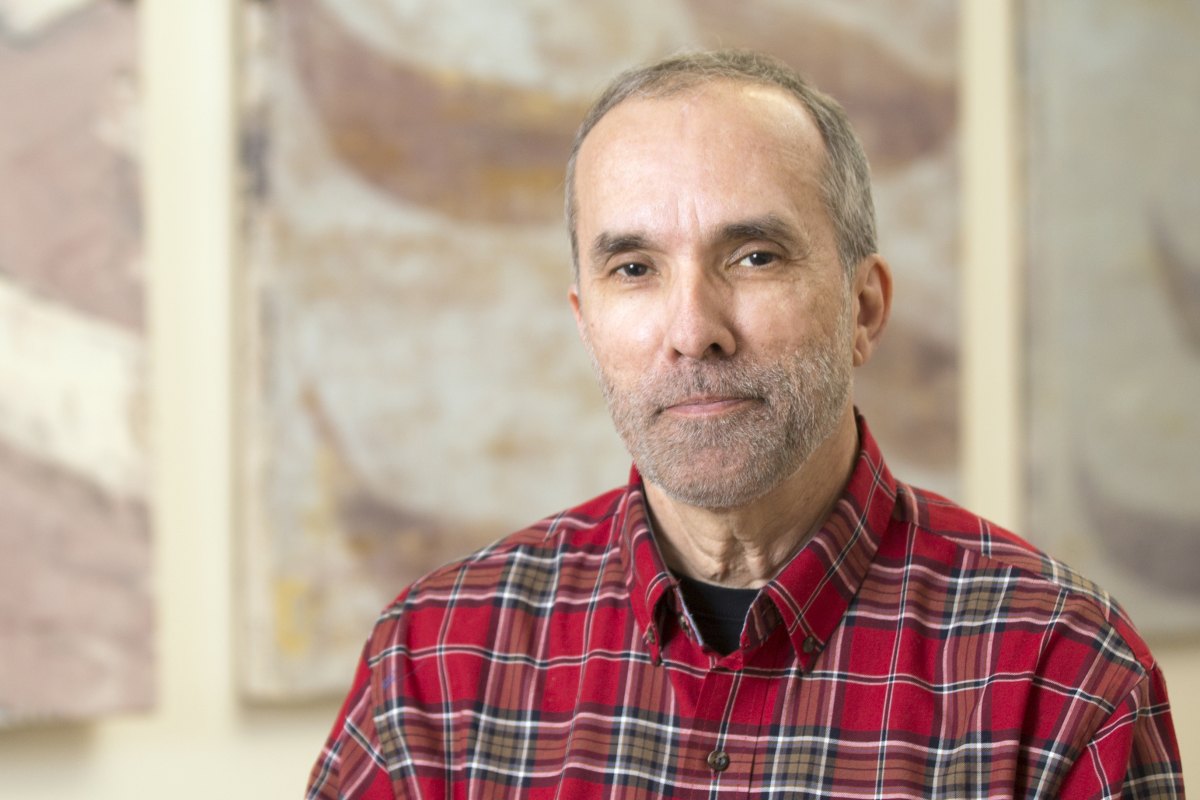
John Valentine’s Throw Wide the Windows, part of the Prolific Press International Chapbook Series, gathers twenty poems shaped by a long life in philosophy and a sustained attention to the natural world.
A retired philosophy professor in Savannah, Valentine draws on Daoism, Buddhism, existentialism, and poets including Mary Oliver and Linda Pastan. The chapbook looks for moments when ordinary experience opens into something larger: a seed stirring, a river at twilight, a monk in flames, the silence after language gives out. In this conversation, he speaks about the Daodejing, David Bottoms, line breaks, rejection, and why a poem sometimes arrives only after the poet lets go.
Prolific PressHow did Throw Wide the Windows begin for you: with a particular poem, a particular moment of attention, or a longer wish to bring poetry, Eastern thought, and lived experience into one chapbook?
I had this title in mind for quite a while, filed away in a "back drawer." I think if there is any one work or experience that has influenced me most it is the Daodejing. There is such meditative beauty in its chapters that takes the reader to depths of spirit unrealized before. I also love the poem "An Early Afterlife" by Linda Pastan and the novel Siddhartha by Hermann Hesse. Slowly, these influences began to coalesce into the poems of Throw Wide the Windows.
Prolific PressThe book keeps returning to windows, seeds, wind, water, fire, silence, and what your description calls the “profound presence of an interconnectedness.” What do you see now as the force that holds these twenty poems together?
The force is exactly the lived nature of the Dao, a profound interconnectedness present in all beings and things. Thus, in a sense, we are all brothers and sisters in this eternal force. And the oneness that my poems try to capture, each in its own way, can be intuited throughout our daily experiences.
Prolific PressIn “The Rich Man,” the poem moves from breakdown and “winter” toward the “stirring / of a seed.” How did you find that turn from mortality into grace?
The turning is sensing spring in winter, and vice versa. The duality of yin and yang. I would say that this sort of movement found me, I didn't exactly find it.
I look for these turnings and intuitions in what is, for me, good poetry. Of course, the language of a poem must also be fresh and startling. I once deleted 200 of my poems that I saw as "failures" (much to my wife's chagrin; she wanted me to cannibalize some of the lines and use them again elsewhere.) Grind and re-write always. But it does happen now and then that a poem "comes to me" almost all at once if I stop all the chatter in my head, relax, and just listen to the world.
Prolific Press“The Old Poet In The Woods,” written for David Bottoms, ends where “the words run out” and silence takes over. What did that poem teach you about elegy, restraint, and knowing when a poem should stop speaking?
David was a friend of mine long ago when we were students at Mercer University in the 1960s. Unfortunately, we lost touch with each other after graduation and David went on to a sparkling career as a much beloved poet. But a quick story: David back then once asked me to come over to his apartment and listen to something special. I did and we listened to a song by Leonard Cohen called "Joan of Arc." I was blown away by the shimmering sadness and beauty of the song. David died a while back. I wrote this poem to honor him.
As to silence, the Daodejing begins by saying that the Dao of which we speak is not the true Dao...
Prolific PressIn “A Buddhist Monk Burning,” the image is public, historical, and almost unbearable, but the language stays spare and controlled. How did you approach writing about that 1963 act without overwhelming the poem?
I was not drafted to go to Vietnam so I was not a direct witness to this stunning event. But I saw incredible newsreels and images of it. I wanted the poem to be just as calm as the priest was in the midst of the flames that consumed him. So I worked and worked and finally found the right words that are, I hope, quite compelling and centered. A side note: after working for so long on it, I finally gave up and "let go," then the window was thrown open.
Prolific PressSeveral poems are in conversation with other writers (Seamus Heaney, Wallace Stevens, William Carlos Williams, Robinson Jeffers, David Bottoms) while still moving toward your own concerns with suchness, impermanence, and attention. How do those “after” and “for” gestures shape the poems without taking them over?
I like using epigraphs that help to situate the theme and mood of some of my poems. They can sort of "point" the reader and then the reader and I can go hand in hand down the path of the poem. I try to develop the feeling of the epigraph. Perhaps the poems are intuitive extensions of the authors' various quotes.
Prolific PressYour lines often break in brief, breath-sized units, so that an image unfolds slowly: river, moon, frost, flame, hand, seed. How do you decide where a line should turn, especially in poems that feel meditative but also tightly paced?
I'm not sure I can fully explain the enjambment. It can be learned but perhaps it cannot be taught. I've been reading tons of poetry for many years. I actually enjoy reading a good poem more than writing one! In any event, whatever skill I have in this regard comes from reading how the greats do it. Just watch them at work and osmosis will occur.
Prolific PressThe chapbook opens with “The Rich Man” and closes with “The Man Who Gave Up Poetry,” where language itself begins to feel like “a kind of lie.” How did you arrive at the order of the manuscript, and did any poems have to be cut for the book to make that final movement?
I didn't have to cut any poems. I had twenty that seemed pretty good. They seemed to capture the essential oneness I spoke of earlier, each in its own singularity. It may be "blasphemy" to say so, but to me the order of the poems need not be fixed in stone. Can one start with #20 and read back to #1? Perhaps.
The last poem reminds me of Wittgenstein's famous statement, "whereof one cannot speak, one must remain silent." I dearly love to play with language (just as Williams did in "Paterson") but eventually if you obsess on words too much you lose the primal experience of the person, place, or thing at hand. Buddhists understand immediately the problem of "clinging" to anything, including language.
Prolific PressYou spent many years teaching philosophy, and the book draws openly on Daoism, Buddhism, existentialism, and writers who looked hard at the natural world. How has a life in philosophy changed the way you write poems now?
Like Siddhartha, I have learned "to think, to wait, and to fast." I very much agree that a writer should write, but there can be weeks or months during which I'm not writing. However, I'm always reading poetry. And waiting for the right inspiration to write anew.
Many of the philosophers I admire have found their way into my poems. So, the philosophies you mention (Daoism, Buddhism, and existentialism) are alive in me. I've taught them for over half my life. Their insights are often poetic intuitions in themselves.
Prolific PressSince retiring in 2022, you’ve kept writing in Savannah while also keeping a competitive online chess ranking and trying to win at gin rummy. What does an ordinary writing day look like for you now, and do games of strategy or chance ever affect your patience with a poem?
Well, I'm not the most exciting fellow around! My days with my wife and my step-grandchildren are very fulfilling. I do play a lot of chess because I find it to be relaxing, and I started to play when I was 13. I'm 77 now and still pushing those pawns. I think, though, that the poetry of Mary Oliver affects me in a positive or patient way more so than chess ever could.
I don't actually have an "ordinary writing day." When a poem comes, it seems to come from a special sub-routine of my brain, or maybe a Muse! Every writer knows this experience.
Prolific PressYou noted that you sent this chapbook to Prolific Press because of your experience with Close to the Fallen. What has it meant to place a second chapbook with a small press?
I trust Prolific Press very much indeed. As I have noted, I sent Throw Wide the Windows to Prolific because of the earlier excellent job they did with Close to the Fallen. The continuity is really good in every way.
What do I hope that readers will find in my new book? The truth, in the many incredible ways it can come.
Prolific PressYou have published poems in journals over many years and are now shaping another chapbook for readers. What would you tell poets who are trying to gather separate published pieces into a manuscript that feels whole?
First, send your poems everywhere feasible. Every journal. Second, you will experience rejections. Count on it. Third, get up off the floor and re-write, re-write, and send them off again. Fourth, wash and rinse all of this again. Never give up. Remember, no one wanted to publish "Leaves of Grass," so Whitman published it himself. You might do the same. But in any event, be a bulldog about your writing...
Now, let's assume you've had some acceptances. Try to find a philosophical theme that unites them. I think of how the experience of his own mortality caused a kind of existential unity in so many of the poems by Dylan Thomas.
Prolific PressWhat question do you wish someone would ask you about Throw Wide the Windows, and how would you answer it?
"Is there a poem by someone else that could serve as a sort of guide for Throw Wide the Windows?"
Yes: "Fern Hill" by Dylan Thomas. Everything and more in my book is in this great poem.
Valentine adds, “How grateful I am to anyone who reads and is inspired by my poetry.”